Lever handle (ball valve)
Turn the handle a quarter turn so it sits across the pipe. Across means closed.
Draft preview. A working name, not a verified business. This site takes no calls or requests yet.
Water still running? Close the main valve now.
A split supply line can pour gallons a minute into a wall, a garage ceiling or a finished basement until someone closes the main. This Douglas County guide walks through the first ten minutes, who fixes the pipe, who dries the house, and what a sound drying plan looks like.
A plain-language guide for Parker homeowners. It is not a contractor and cannot send anyone to your house.
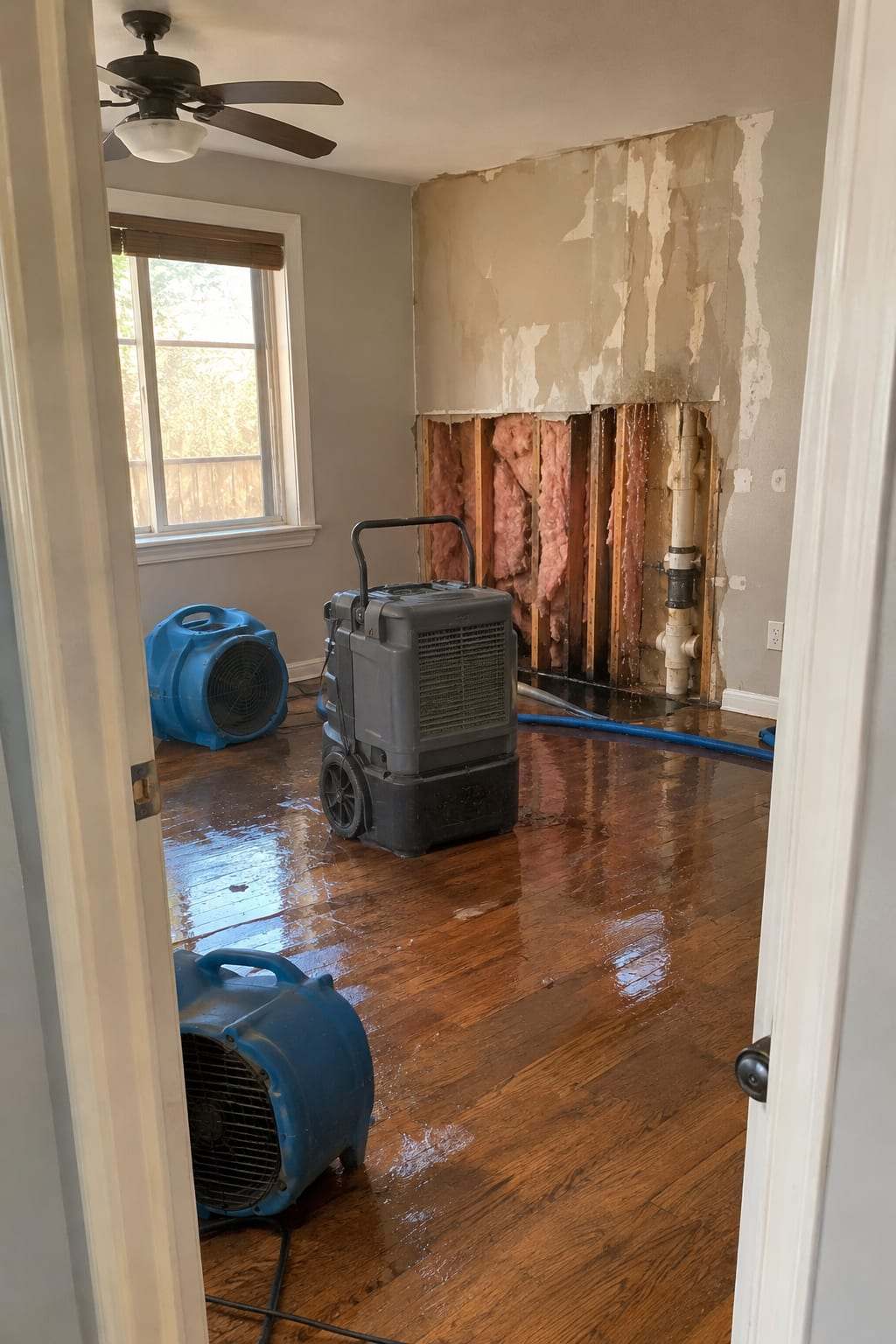
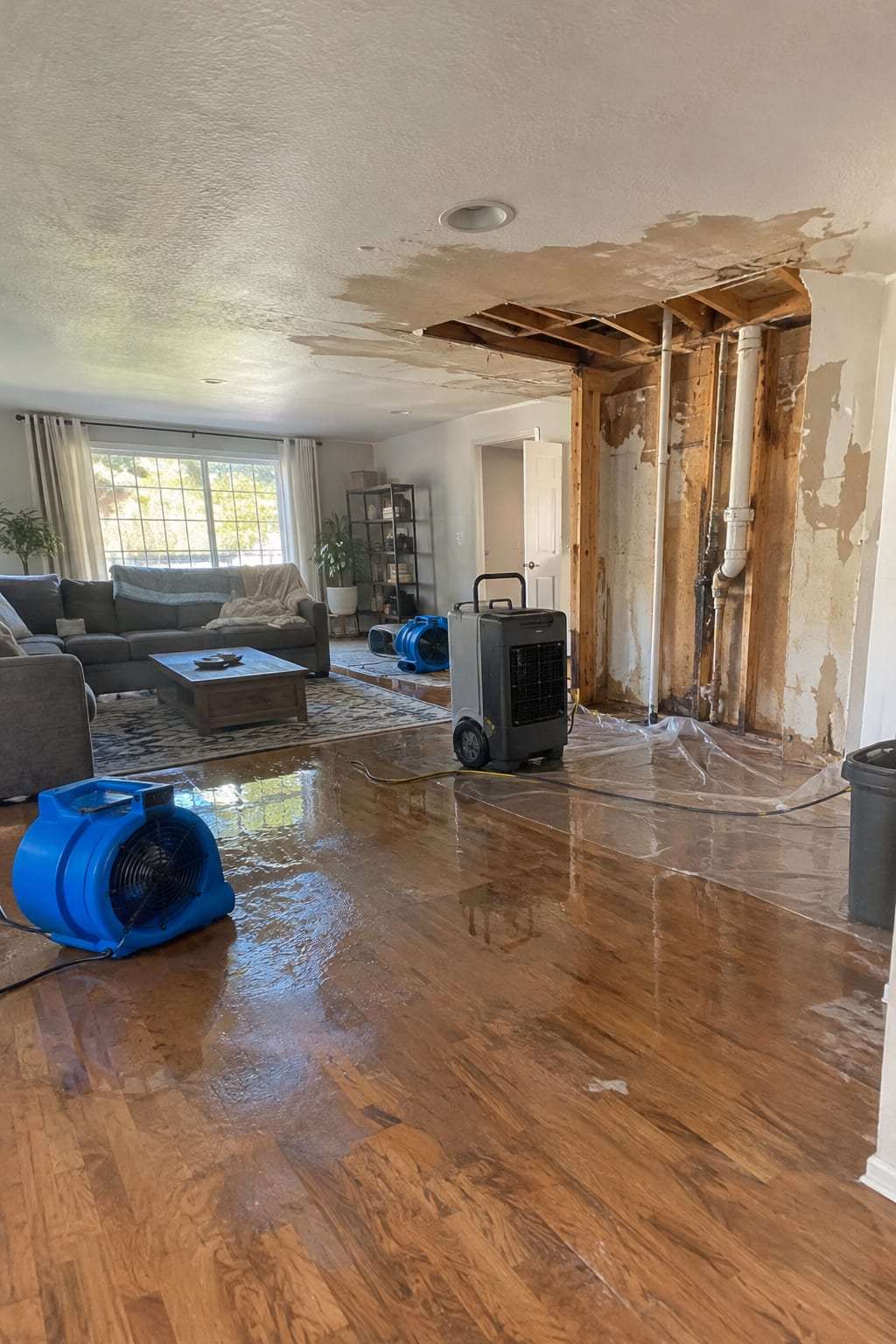
A failed supply-line fitting, and a technician bailing beside a water heater. Photos on this site show the kind of work involved, not a verified job.
Work through these in order. Read the rest of this page once the water has stopped.
Close the main water valve. If you don't know where it is, find it this fall, before you need it.
Open the lowest faucet in the house to drain the lines and drop the pressure.
Switch off breakers for wet rooms if you can reach the panel without standing in water.
Call a plumber for the pipe and a restoration company for the water. Most bursts need both the same day.
Someone hurt, or water near the electrical panel? Call 911 before anything else.
Water grows about 9 percent in volume as it freezes. Trapped between an ice plug and a closed faucet, that growth drives the pressure up until the pipe splits, often a few feet from the ice itself. Nothing leaks while the line stays frozen. You find out when it thaws: the next afternoon while you're at work, or at 2 a.m. once the furnace catches up.
A line in an exterior wall or garage drops below freezing.
An ice plug forms. Pressure builds between the plug and the closed faucet.
The pipe splits at its weakest point. Nothing leaks while it stays frozen.
The ice melts and water pours through the split until someone closes the main.
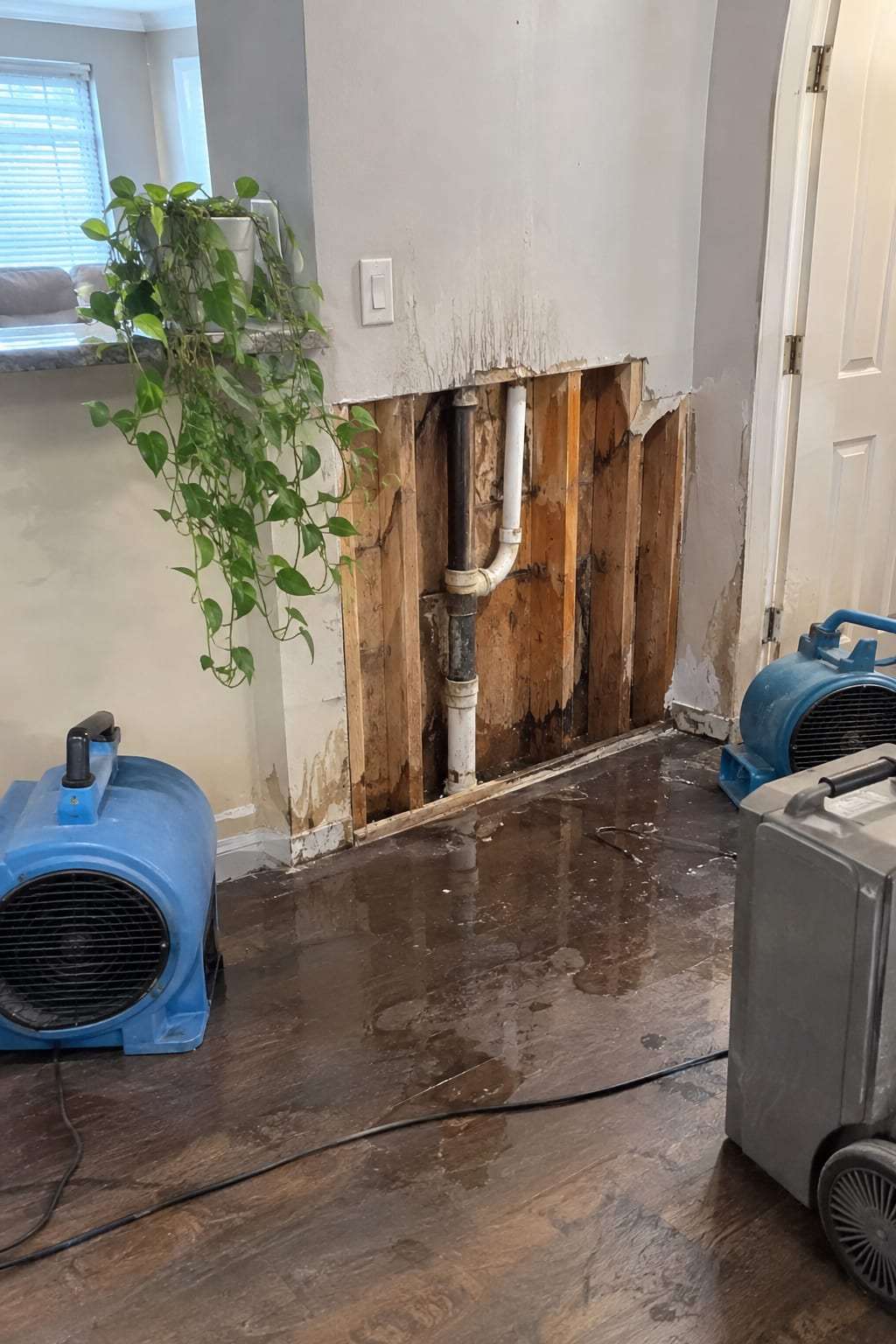
Lines in exterior walls, attached garages, crawl spaces, unfinished basements and attics freeze first, along with hose bibs and irrigation lines left connected. A split inside a wall can run for hours before a stain reaches the drywall, so cleanup means drying the cavity behind the wall, not just mopping the floor in front of it.
A frozen pipe leaks only after it thaws, so the water usually starts when nobody is home to see it.
In most Parker homes the main sits where the water line comes through the foundation: the basement mechanical room, a crawl space near the water heater, or sometimes the garage. Expect one of two kinds.
Turn the handle a quarter turn so it sits across the pipe. Across means closed.
Turn it clockwise until it stops. Older gate valves stick, so go slow.
Don't force an old valve with a wrench. It can snap and make the leak worse. Call your water provider's emergency line and ask them to shut off at the curb.
Slow, gentle heat from the faucet end. Anything faster risks a second break or a fire.
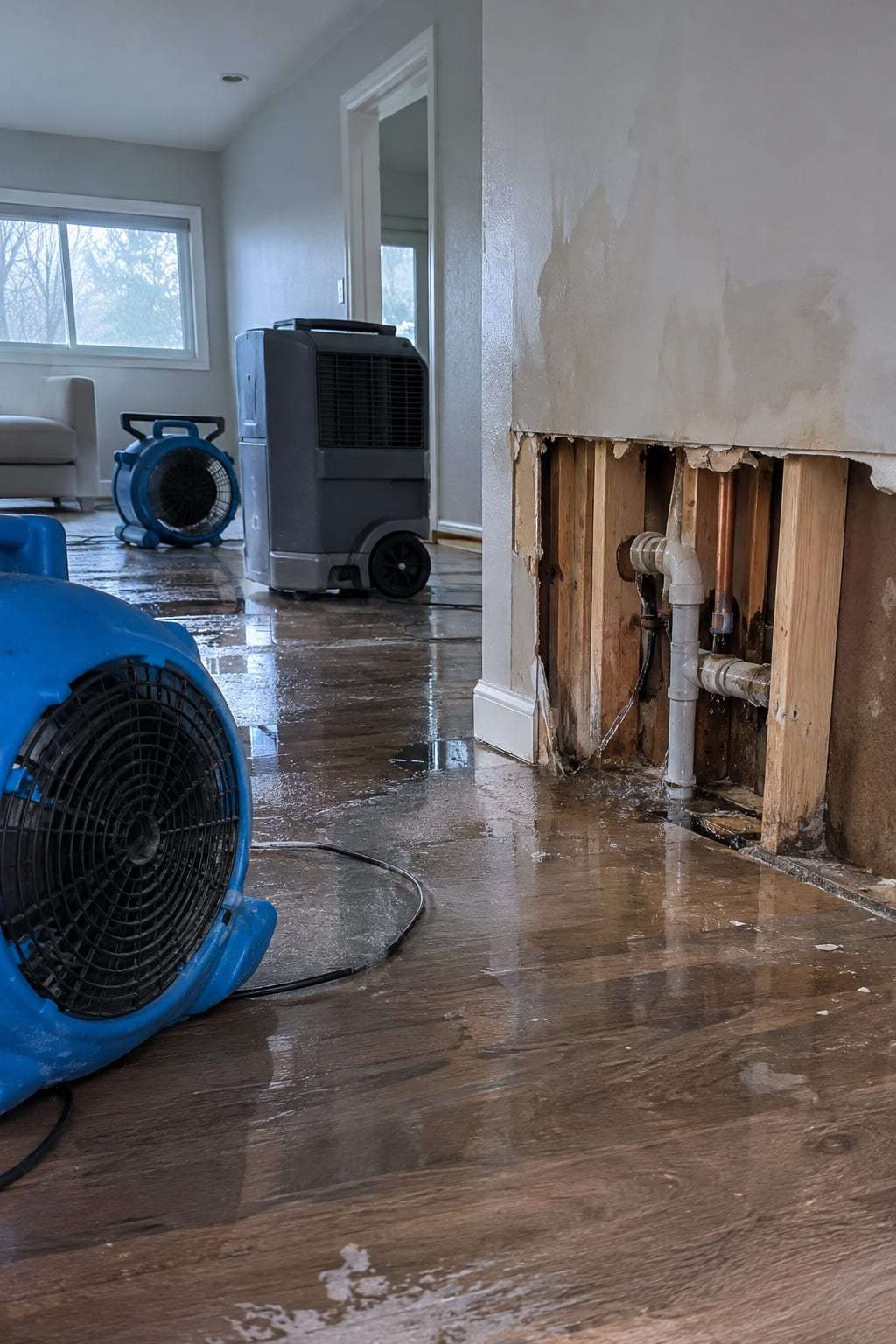
Water from a supply line starts out clean. Start drying fast and more of the drywall, carpet pad and trim can be dried in place instead of torn out.
The leak has stopped, and the plumber has repaired the pipe or put the repair on the calendar.
Extraction wands and pumps lift water out of carpet, pad and hard floors in every wet room.
Small, targeted cuts at the base of walls and in ceilings let air reach the cavities where the water ran.
Dehumidifiers and air movers run while someone updates the moisture map each day against a written drying goal.
Drywall, insulation, paint and flooring go back once the readings show the structure is dry.
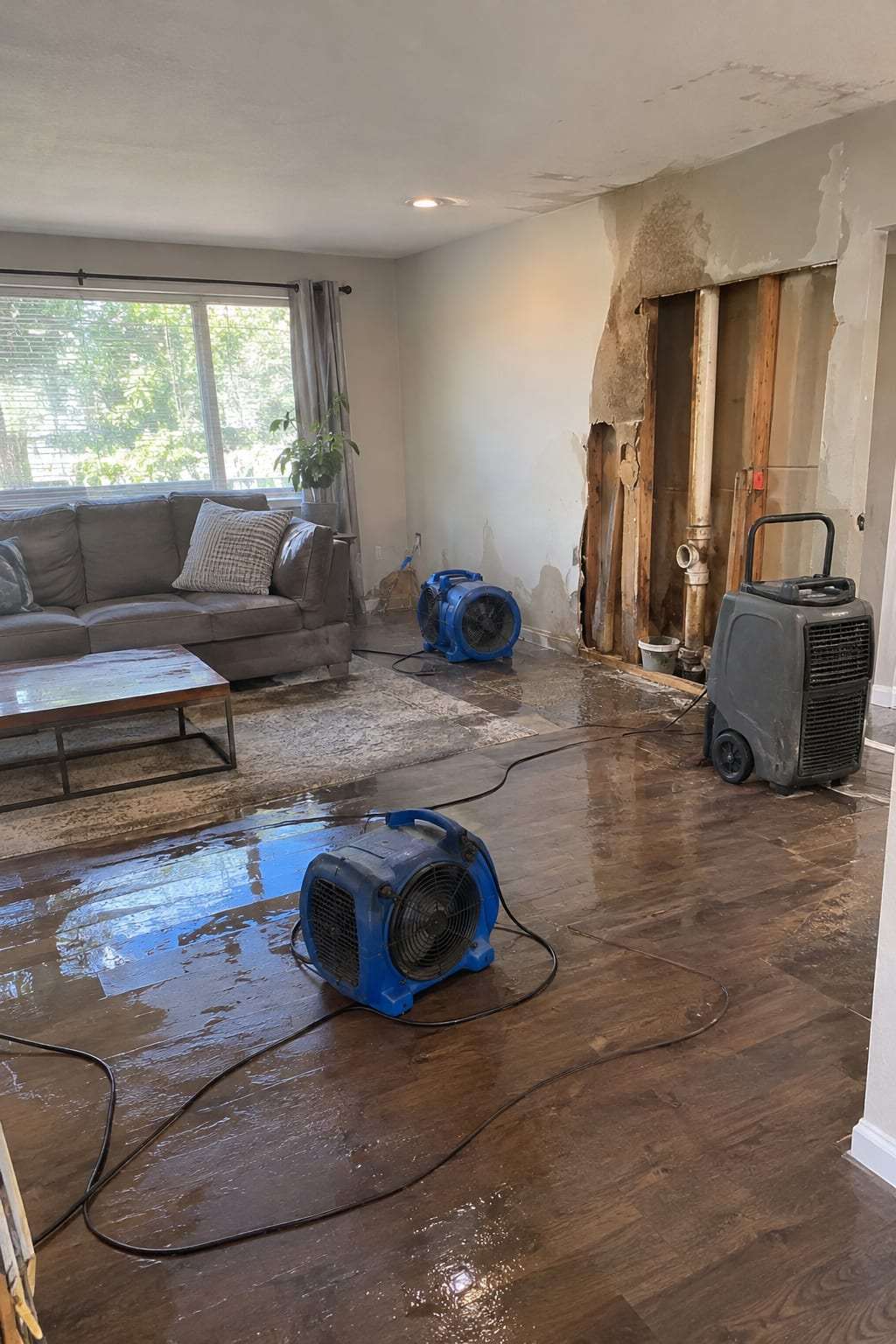
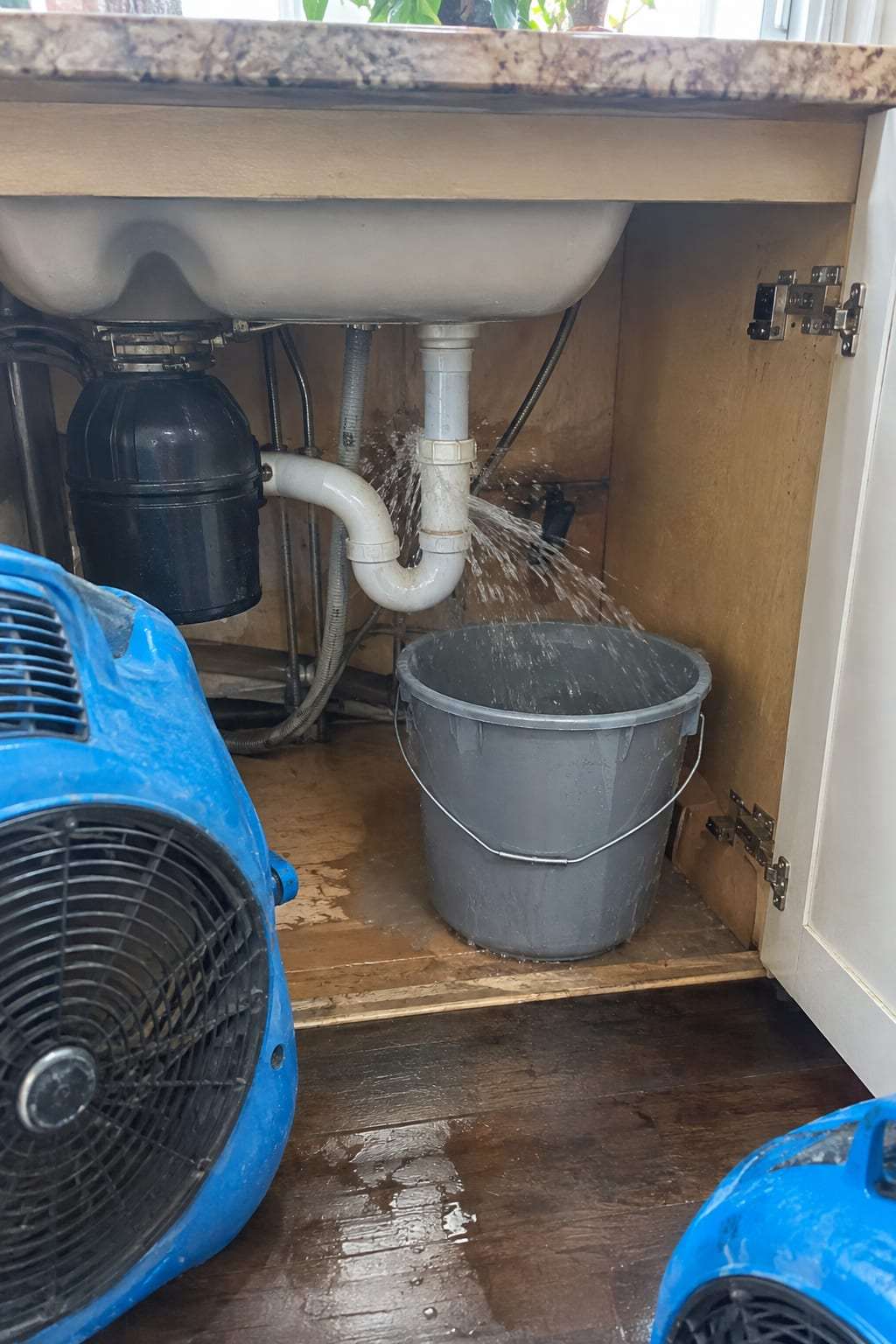
Three things to ask about before anyone runs equipment or cuts drywall.
Meters read the moisture in floors, walls and framing, then compare it with a dry room in the same house. That dry reading becomes the drying goal. Ask for it in writing.
Each reading goes on a floor plan, so you can see where the water traveled and where it stopped. Ask for the map before any cuts, and an updated one each day.
Wet hardwood cups as the boards swell. Drying mats and dehumidifiers can often dry it in place. Sanding and refinishing wait until readings match the dry goal. Boards that crack or stay cupped get replaced.
A burst pipe leaves you two problems: the pipe, and the water it let out. Different trades handle each, often on the same day.
| Task | You | Plumber | Restoration company |
|---|---|---|---|
| Close the main water valve | Right away | Not their job | Not their job |
| Find and repair the split pipe | Not their job | Yes | Not their job |
| Thaw other frozen lines safely | Not their job | Yes | Not their job |
| Extract standing water | Not their job | Not their job | Yes |
| Dry walls, floors and ceilings against daily readings | Not their job | Not their job | Yes |
| Remove material that can't be dried | Not their job | Not their job | Yes |
| Repair drywall, paint and flooring | Not their job | Not their job | Restoration company or contractor |
| Document the loss for insurance | Photos | Repair invoice | Moisture logs and an itemized estimate |
Parker sits just under 6,000 feet on the plains southeast of Denver. Winter nights drop well below freezing, and arctic fronts push temperatures below zero a few times a season. Those stretches cause most frozen-pipe losses, because pipes in exterior walls, garages and unheated spaces lose heat faster than the furnace can replace it.
Plenty of Parker homes pair an attached garage with an irrigation system and a finished basement, so one split line can soak three rooms on two floors. The prevention list is short. Work through it before the first hard freeze.
ZIP codes served: 80134 (Parker), 80138 (Parker).
Also nearby: 80016, 80112, 80124, 80108, 80015.
Longer explainers and worksheets on shutoffs, thawing, drying and the insurance paperwork that follows.
Hiring someone soon? Read what to ask about cost and scope first.
Open the faucet first. Then warm the frozen section gently with a hair dryer, a heating pad or a space heater kept a safe distance away. Never use an open flame. If you can't find or reach the frozen section, call a plumber.
Policies commonly cover a sudden burst. Many exclude freeze damage if the home wasn't reasonably heated, or if a vacant home's water wasn't shut off and drained. Read your policy and report the loss quickly.
Usually both. The plumber repairs the pipe. The restoration company removes the water and dries the structure. They can work the same day.
Water released inside a wall soaks the insulation and framing, and neither can dry through intact drywall. Small, targeted openings let air into the cavity and keep mold from starting.
Insulate pipes in unheated spaces, seal air leaks near them, disconnect hoses, keep the heat on and let faucets drip in extreme cold. A plumber can reroute a line that keeps freezing.
Many clean-water losses dry in three to five days. Water inside walls and ceilings, or under hardwood, can take longer.
Open the faucet it feeds so melting water and pressure can escape. Warm the pipe gradually, starting at the faucet end and working back toward the frozen section, with a hair dryer, warm towels or a space heater kept a safe distance away. Never use a torch or open flame. If you can't find or reach the frozen section, call a plumber.
Close the main. Cut power to wet rooms if you can do it safely. Photograph everything, call your insurer, then hire a plumber and a restoration company you have checked out. If anyone is hurt or in danger, call 911.
A careful restoration company confirms the water is off, then asks where the pipe split and which rooms are wet. Ask when someone can realistically arrive, whether a person answers after hours, and for the drying plan and pricing in writing. Extraction and drying start once the leak is stopped.
This form is not connected. This website is a draft preview: no business has been confirmed to receive requests, so the fields below are switched off and nothing can be sent. In an emergency, call 911.